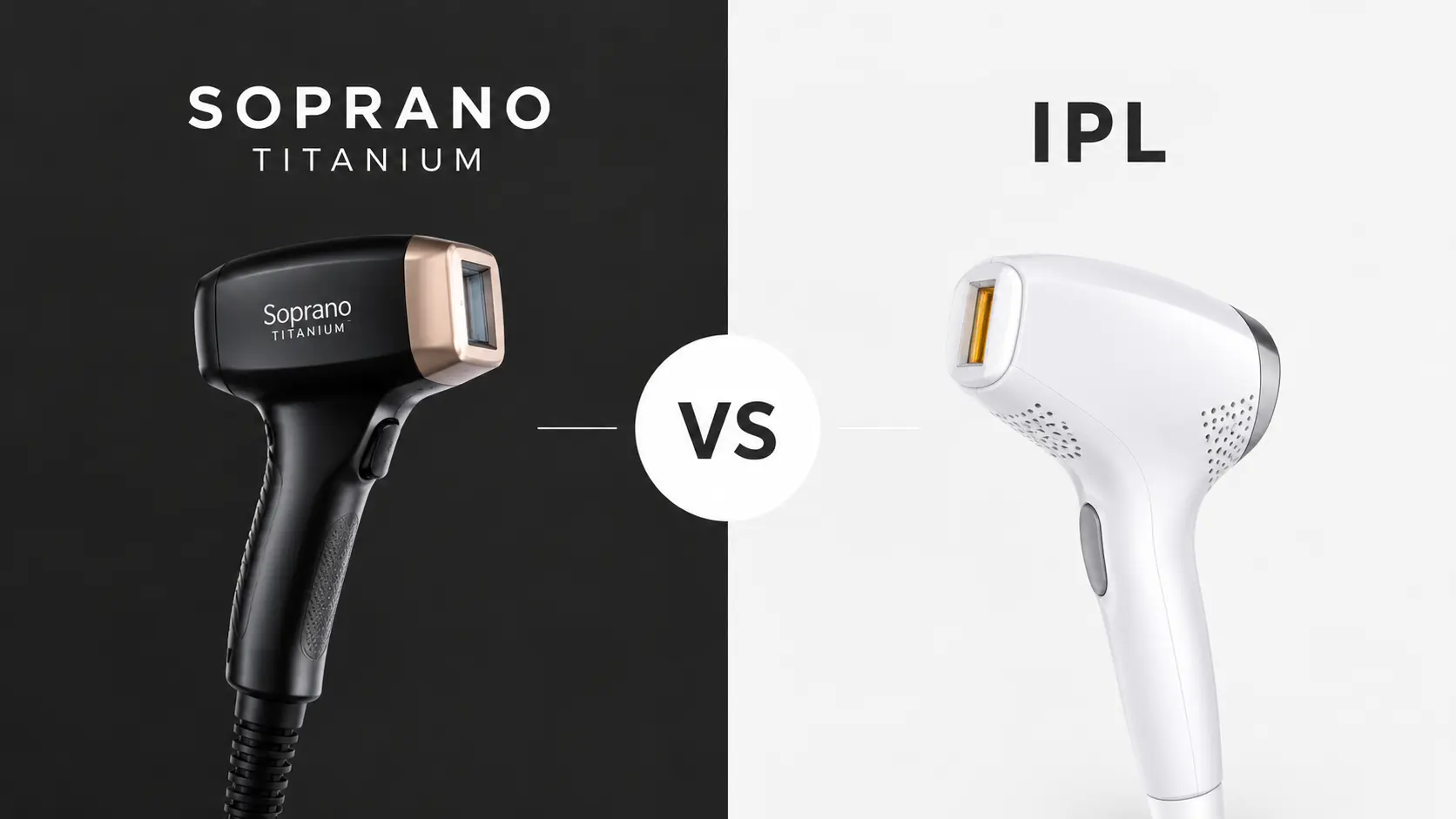
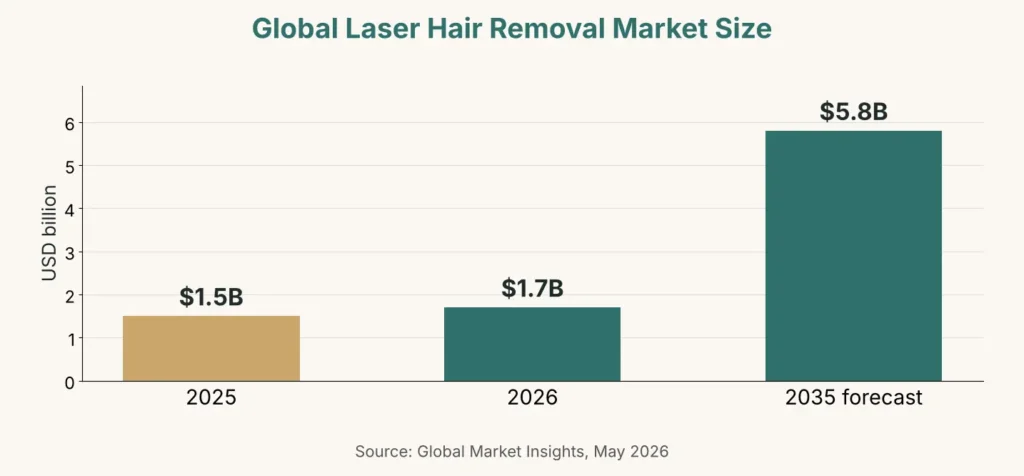
Choosing between Soprano Titanium vs IPL affects how many sessions you book, how much you spend and how well the treatment works on your skin. The global laser hair removal market grew from $1.5 billion in 2025 to $1.7 billion in 2026, so more clinics now offer both options.
Thank you for reading this post, don't forget to subscribe!Both treatments use light to heat the pigment in your hair and damage the follicle. However, one uses focused laser wavelengths and the other uses broad spectrum light. That difference changes results, comfort and safety on darker skin.
This guide compares technology, results, skin suitability and cost side by side. You will also see when each option fits. If you want to see a full range of hair removal treatments in Kent, start there.
Understanding Soprano Titanium vs IPL Hair Removal
Soprano Titanium is a medical laser platform, while IPL is a broad spectrum light device. Both reduce hair growth by heating the follicle. The laser delivers more precise energy, so it reaches the follicle more efficiently.
What Is Soprano Titanium Laser Hair Removal?
Soprano Titanium is a hair removal laser from Alma Lasers. It combines three wavelengths in one handpiece: 755 nm alexandrite, 810 nm diode and 1064 nm Nd:YAG. Your practitioner picks the wavelength that matches your skin tone and hair type.
The system uses In Motion technology. The handpiece glides across the skin and heats the follicle in stages instead of firing one strong pulse. As a result, you feel warmth rather than sharp snaps.
What Is IPL (Intense Pulsed Light) Hair Removal?
IPL stands for intense pulsed light. It is not a laser. An IPL device flashes broad spectrum light, usually between 500 and 1200 nm, through a filter. Pigment in the hair absorbs part of that light and heats the follicle.
Because the light spreads across many wavelengths, only some of the energy reaches the follicle. Salons, clinics and home devices all use IPL, so power and quality vary widely.
Soprano Titanium vs IPL: How Do They Work?
Both treatments target melanin, the pigment in your hair. The light turns into heat and damages the follicle, so it grows less hair. The wavelength and delivery method decide how much heat reaches the follicle and how much stays in your skin.
How Soprano Titanium work?
- The handpiece emits laser light at 755, 810 or 1064 nm.
- It glides across the skin and builds heat in the follicle in stages.
- A cooling tip protects the skin surface throughout.
How IPL work?
- The device flashes broad spectrum light through a filter.
- The operator places it on one spot, flashes, then moves on.
- Melanin absorbs part of the light, and the rest scatters into the skin.
Because laser energy is focused, more of it reaches the follicle. As a result, you get stronger hair reduction with less surface heat.
Soprano Titanium vs IPL: Key Differences Compared
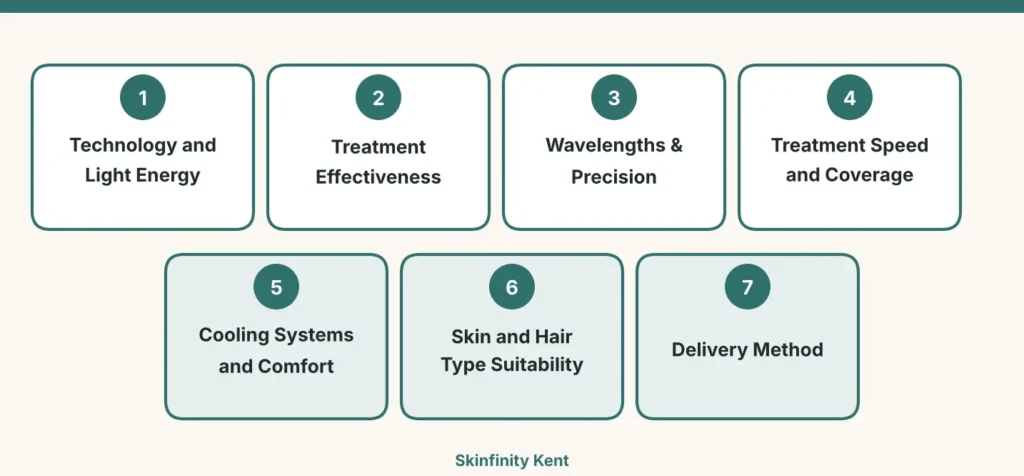
Laser hair removal vs IPL comes down to wavelength control, power and cooling. A laser focuses energy on the follicle. IPL spreads energy across many wavelengths.
1. Technology and Light Energy
A laser produces coherent light. Every photon shares one wavelength and travels in the same direction. IPL produces non-coherent light, which scatters and loses energy before it reaches the follicle.
Soprano Titanium also delivers low-energy pulses in rapid repetition. This builds heat gradually. IPL relies on a single high-energy flash instead.
2. Treatment Effectiveness
Lasers deliver higher peak reduction. One split face study compared diode laser and IPL over six sessions. The diode laser reached 78.13% maximum hair reduction, while IPL reached 56.23%, and the gap was statistically significant.
In addition, a meta analysis of skin types III to VI found a trend toward greater hair reduction with lasers.
3. Wavelengths & Precision
Wavelength decides which structures absorb the energy. An 810 nm diode wavelength reaches deep into the follicle. A 1064 nm Nd:YAG wavelength passes through surface pigment, which protects darker skin. The 755 nm alexandrite wavelength suits fine hair on lighter skin.
In an IPL vs diode laser comparison, the gap is clear. A diode laser fires one chosen wavelength. IPL fires a wide band from about 500 to 1200 nm, and filters only narrow it. Soprano Titanium goes further by offering all three laser wavelengths in one system.
4. Treatment Speed and Coverage
Soprano Titanium uses a large handpiece that glides over the skin. Large areas such as legs, back and chest take less time because you do not wait between flashes.
IPL windows are smaller on many devices, so large areas need many separate flashes. Therefore each appointment runs longer.
5. Cooling Systems and Comfort
Soprano Titanium has a sapphire contact cooling tip that chills the skin as the laser works. Because the energy builds gradually, most clients feel warmth.
IPL flashes feel sharper to many people, and cooling depends on the device. Home devices usually offer the least cooling.
6. Skin and Hair Type Suitability
Soprano Titanium treats a wide range of skin tones because your practitioner swaps wavelengths. IPL works best on light to medium skin with dark hair.
Both treatments need pigment in the hair. White, grey and red hair respond poorly to either one.
7. Delivery Method
Trained practitioners deliver Soprano Titanium in a clinic. They test a patch, choose the wavelength and adjust settings to you.
IPL comes from salons, clinics and home devices. Home devices use low power, so results arrive slowly. Professional laser reaches stronger energy levels.
Soprano Titanium vs IPL: Which Is More Effective?
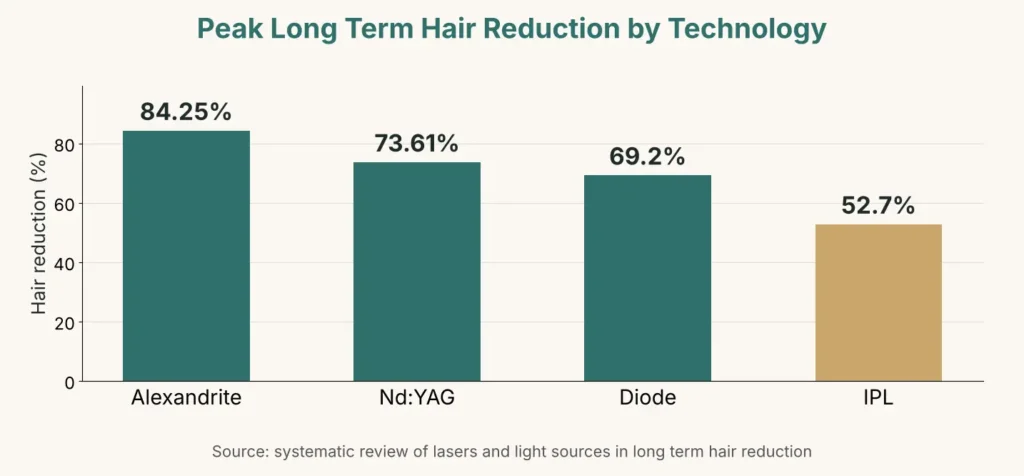
Soprano Titanium delivers higher peak hair reduction than IPL in published reviews. It also needs fewer sessions for most people. Both give long term reduction, but neither guarantees full removal.
Hair Reduction Results
Soprano Titanium uses three laser wavelengths to target hair follicles at different depths, supporting effective long-term hair reduction. IPL uses broad-spectrum light to target hair pigment and reduce unwanted growth. Both treatments can deliver noticeable results, although effectiveness depends on individual skin tone, hair type and treatment settings.
Number of Treatment Sessions Required
Most people need 6 to 8 laser sessions, spaced 4 to 8 weeks apart. IPL usually needs more sessions to reach a similar result. Body area, hair thickness and hormones all change the count. For a full breakdown, read how many sessions you need.
Long-Term Hair Reduction Results
Hair grows in cycles, and only follicles in the active growth phase respond. That is why you need a course instead of one session. Laser hair removal vs IPL shows the same pattern over time. Each session thins and lightens more hair. After a full course, you see fewer, finer hairs. The accurate term is permanent hair reduction, not total removal.
Hair Regrowth and Maintenance Treatments
Hormonal changes such as pregnancy, menopause and thyroid conditions can restart growth. Plan one or two maintenance sessions a year after your course. IPL users often need maintenance more often because each session disables fewer follicles.
Which Treatment Is Better for Different Skin Tones and Hair Types?
Skin tone and hair colour decide which treatment is safe and effective. Light skin with dark hair suits both options. Darker skin needs a longer wavelength that bypasses surface pigment.
Soprano Titanium vs IPL for Light Skin
Both treatments work well on light skin with dark hair because the contrast is high. Soprano Titanium still treats faster and reaches higher reduction. IPL works here, but results depend on correct power settings.
Soprano Titanium vs IPL for Dark Skin
Dark skin absorbs more light at the surface, which raises the risk of burns and pigment changes. The 1064 nm Nd:YAG wavelength in Soprano Titanium passes through surface pigment to reach the follicle. A meta analysis of skin types III to VI found Nd:YAG caused less post inflammatory hyperpigmentation than IPL. Therefore laser is the safer choice for darker skin tones.
Treatment Suitability for Coarse and Thick Hair
Coarse hair holds more pigment, so it absorbs more energy and responds fastest. Both treatments work, but laser clears coarse hair in fewer sessions. Underarms, bikini line, and a man’s back and chest respond well.
Treatment Suitability for Fine and Light-Coloured Hair
Fine hair holds less pigment, so results arrive slowly. The 755 nm alexandrite wavelength targets fine dark hair well.
White, grey and red hair lack the pigment both treatments need. In those cases, neither laser nor IPL gives dependable results, and your practitioner tells you at consultation.
Soprano Titanium vs IPL: Cost Comparison (Table)
IPL usually costs less per session. Soprano Titanium often costs less over a full course because it needs fewer sessions. Your total depends on the area, the number of sessions and maintenance.
| Factor | Soprano Titanium (Skinfinity Kent) | IPL (UK clinic average) |
| Price per session | £30 to £299, by area | £50 to £250 |
| Sessions needed | 6 to 8 | 8 to 12 |
| Course cost, all areas | £180 to £1,794 for 6 sessions | About £400 to £3,000 for 8 to 12 sessions |
| Small area course | £180 to £330 | About £280 to £420 at £35 per session |
| Maintenance | One or two sessions a year | Often more frequent |
| Home option | No | £200 to £450 one off device |
For current clinic prices, see our UK pricing guide.
Soprano Titanium vs IPL: Which Hair Removal Treatment Should You Choose?
Soprano Titanium vs IPL comes down to your skin tone, hair colour and how long you want results to last. Choose laser for stronger and safer results on most skin types. Choose IPL only when your skin is light, your hair is dark and you accept slower progress.
When Should You Choose Soprano Titanium?
Choose Soprano Titanium if you:
- Have medium, olive, brown or dark skin
- Want results in fewer sessions
- Need to treat large areas such as legs or back
- Have coarse or stubborn hair
- Prefer a supervised, professional treatment
When Might IPL Be a Suitable Option?
IPL suits you if you:
- Have light skin and dark hair
- Want a lower upfront cost
- Accept slower progress and more sessions
- Plan to use a home device with careful patch tests
How to Choose the Right Treatment for Your Skin and Hair
- Match your skin tone and hair colour to the guidance above.
- Book a consultation with a trained practitioner.
- Ask for a patch test before your first session.
- Compare the total course cost, not the price per session.
- Agree a maintenance plan before you start.
Why Choose Soprano Titanium at Skinfinity Kent?
Skinfinity Kent offers Soprano Titanium at its Kings Hill clinic in West Malling. Jodie, your practitioner, has over 11 years of experience. You get a free consultation before you commit.
Our Soprano Titanium laser hair removal service covers the face and body. Here is what you get:
- A free consultation
- Klarna pay in 3 plans
- Appointments seven days a week
- Off road parking at the clinic
Use the consultation to confirm your skin tone, hair colour and the number of sessions you need.
Prepare for your first session:
- Shave the area the day before.
- Avoid sun exposure and tanning in the weeks before.
- Skip waxing and plucking, because the laser needs the hair root.
When you are ready, book your free consultation online.
Frequently Asked Questions
1. Is IPL laser better or soprano?
No. IPL is not a laser. It flashes broad spectrum light, while Soprano Titanium uses focused laser wavelengths. Soprano Titanium gives higher peak reduction, treats more skin tones and needs fewer sessions. It is the stronger option for most people.
2. What is more effective than IPL?
Professional laser treatment. Alexandrite, Nd:YAG and diode lasers all reach higher peak hair reduction than IPL in published reviews. Soprano Titanium combines all three wavelengths in one system.
3. Which type of laser hair removal is most effective?
Alexandrite shows the highest peak reduction in reviews, at 84.25%. However, the best laser depends on your skin and hair. Alexandrite suits light skin and fine hair, diode suits most skin types and Nd:YAG suits dark skin.
4. Is soprano titanium a good laser machine?
Yes. It combines 755, 810 and 1064 nm wavelengths, uses In Motion technology and cools the skin during treatment. Therefore it treats many skin tones and large areas efficiently. Results still depend on a trained practitioner and correct settings.
5. Does Soprano Titanium remove hair permanently?
It reduces hair permanently, but not completely. A full course disables many follicles, so you see fewer, finer hairs. Hormonal changes can wake dormant follicles, so occasional maintenance sessions protect your results.
6. Is Soprano Titanium safer for darker skin than IPL?
Yes, in most cases. The 1064 nm Nd:YAG wavelength passes through surface pigment, and the cooling tip protects the skin. A meta analysis found Nd:YAG caused less pigment change than IPL. A patch test confirms safety for your skin.
7. How many Soprano Titanium sessions do I need?
Most people need 6 to 8 sessions, spaced 4 to 8 weeks apart. Small areas with thick hair finish sooner, while hormonal hair needs more. Your practitioner sets the plan at your consultation.