How many laser hair removal sessions you need depends on your hair colour, skin tone, treatment area and the laser used. Most people need 6 to 8 sessions, spaced 4 to 8 weeks apart. The global market for this treatment reached about $1.7 billion in 2026, which shows how many people now choose laser over shaving and waxing.
Thank you for reading this post, don't forget to subscribe!This guide gives you the typical course for each body area, the results you can expect at each stage and clear steps for preparation and aftercare. You will also see how Soprano Titanium technology fits into your plan.
Every body responds differently. Still, the ranges below give you a reliable starting point before you book your first laser hair removal sessions in Kent. Read on to build a realistic plan.
How Many Laser Hair Removal Sessions Do You Need?
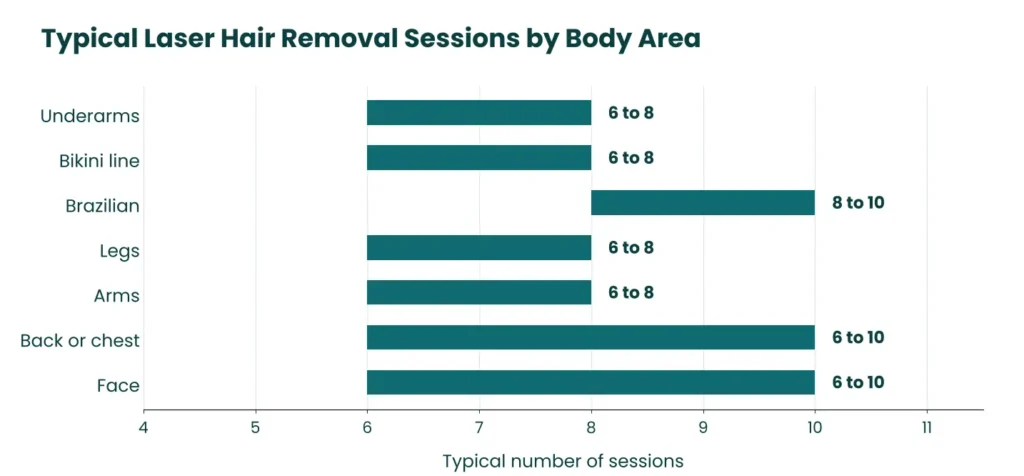
Your course length depends on how your hair and skin respond to the laser. Most clients start with 6 to 8 sessions. Larger areas and hormone sensitive areas need more.
Average Number of Sessions for Most People
The usual starting course is 6 to 8 sessions. Treat this as a guide, not a guarantee. Your practitioner reviews your progress after the second or third visit and adjusts the plan.
The number of laser hair removal treatments you finish with depends on how quickly your hair thins. Some people stop at 6 sessions. Others add 2 to 4 more to clear stubborn patches. In either case, the first three visits show you how your body responds.
Laser Hair Removal Sessions by Body Area
Each area has its own hair density and growth speed. As a result, course length and spacing change from one area to the next. This table shows what to expect.
| Treatment area | Typical number of sessions | Usual spacing |
| Underarms | 6 to 8 | 4 to 6 weeks |
| Bikini line | 6 to 8 | 4 to 6 weeks |
| Brazilian | 8 to 10 | 4 to 6 weeks |
| Legs | 6 to 8 | 6 to 8 weeks |
| Arms | 6 to 8 | 6 to 8 weeks |
| Back or chest | 6 to 10 | 6 to 8 weeks |
| Face, upper lip and chin | 6 to 10 | Around 4 weeks |
What Affects How Many Sessions You Need?
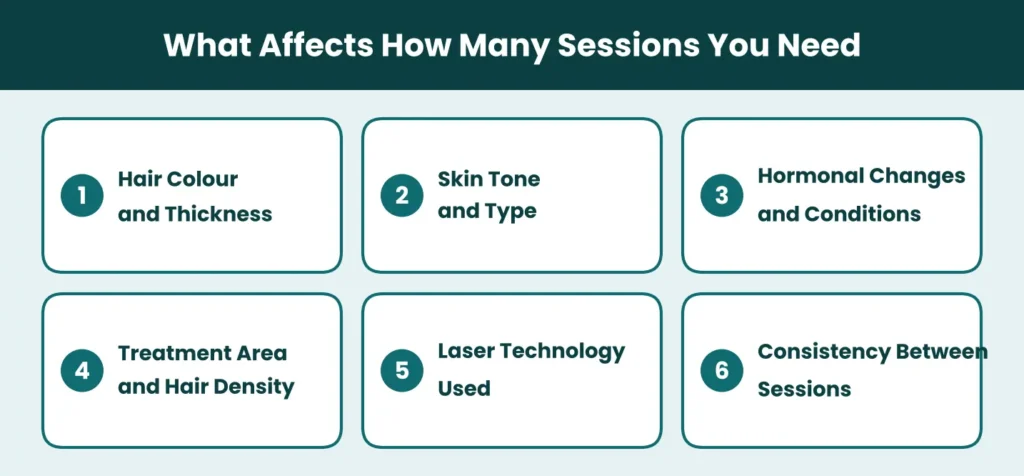
Six factors decide your course length. You control some, such as consistency. Others, like your hormones, stay fixed. Knowing them helps you set a realistic plan from day one.
1. Hair Colour and Thickness
Laser energy targets melanin, the pigment in your hair. Dark, thick hair absorbs the most energy, so it responds fastest. Fine, light or blonde hair absorbs less, so you usually need extra sessions. Grey and white hair lack pigment, and laser does not treat them well. If most of your hair is light, ask for a test patch before you commit to a full course.
2. Skin Tone and Type
The best contrast is dark hair on lighter skin. However, modern lasers treat deeper skin tones safely when the wavelength and settings match. Your practitioner sets the power level for your skin type. A cautious setting protects your skin, but it can add a session or two. Never skip the patch test, because it shows how your skin reacts.
3. Hormonal Changes and Conditions
Hormones drive hair growth. Pregnancy, menopause, polycystic ovary syndrome and thyroid changes all trigger new or thicker hair. Because of this, clients with these conditions often need more sessions and regular top ups. Hormone driven hair usually appears on the chin, jawline and lower abdomen. Tell your practitioner about any hormonal changes so your plan fits.
4. Treatment Area and Hair Density
Dense areas need more passes to catch every follicle. Laser hair removal for different body areas therefore follows different timelines. Underarms clear faster than the chin, because chin hair responds to hormones. Large areas like the back also take longer per visit, even though the session count looks similar.
5. Laser Technology Used
The device you choose sets your comfort, safety and speed. Wavelength range, pulse control and skin cooling all shape how many laser hair removal sessions you book. Clinic grade systems outperform home devices, because they deliver controlled, powerful energy. In addition, a multi wavelength laser treats mixed hair types in one visit.
6. Consistency Between Sessions
Missed appointments let hair slip out of sync with the growth cycle. Consequently, your course stretches longer. Keep every slot, shave before each visit and follow your aftercare. These simple habits protect your progress and your budget. Likewise, avoid sun exposure between visits, because tanned skin can force a delay.
Expected Results at Different Stages of Laser Hair Removal
Results build gradually across your course. You see shedding first, then thinner regrowth, then clear skin. This timeline shows what happens and when, so you can judge how many laser hair removal sessions suit your goals.
Immediately After Your First Session (Days 1 to 3)
Expect mild redness, a warm feeling or slight swelling around the hair follicles. These effects usually fade within a few hours. If redness lasts longer, apply a cool compress and contact your clinic.
Hair Shedding Phase (Weeks 1 to 3)
Treated hairs can look like they are growing at first. In fact, the follicle is pushing them out. Between day 7 and day 20, these hairs loosen and shed naturally. You will notice an initial reduction of roughly 10% to 40%.
Do not pluck them out. Instead, wash gently and let them fall away. These early laser hair removal results are encouraging, but they only start the course.
Results After 2 to 3 Sessions
Regrowth turns sparser, patchier and slower. You shave less often, and the gaps between shaves grow longer. Returning hair is finer and lighter in texture. As a result, most clients feel the first real change at this point.
Results After 4 to 6 Sessions
Reduction often reaches 80% or more. Your skin feels smoother, and shaving rash, stubble and ingrown hairs drop sharply. Many clients stop shaving daily at this stage.
Results After Completing the Full Treatment Course
At this point, your skin stays smooth for months at a time. Laser hair removal before and after results show the biggest gap here. Most clients stop shaving the treated area, apart from a few fine hairs. Take photos before session one, so you can compare your own progress.
Long-Term Results and Maintenance (6+ Sessions)
Hair reduction typically reaches 80% to 95% or more. Laser gives long term reduction rather than 100% permanent removal. Therefore, annual or twice yearly maintenance sessions keep the area smooth. Your lasting laser hair removal results depend on your hormones, hair type and how closely you follow your schedule.
Recommended Intervals Between Laser Hair Removal Sessions
Spacing matters as much as session count. Laser works only on hairs in the active growth phase. Timing each visit to catch new growth gives you the best outcome.
Treatment Intervals for Different Body Areas
How often should you get laser hair removal? The answer depends on how fast your hair grows. Faster growing areas need shorter gaps.
- Face, upper lip and chin: around every 4 weeks
- Underarms and bikini line: every 4 to 6 weeks
- Legs and arms: every 6 to 8 weeks
- Back and chest: every 6 to 8 weeks
Your practitioner confirms the exact gap at each visit, because hair growth shifts with hormones and the season.
Importance of Following Your Treatment Schedule
Hair grows in cycles, and only a portion of your hairs sit in the active phase at any time. Regular visits catch each new batch as it appears. This steady rhythm is why a course of 6 to 8 works. It also explains why most people need several visits before the skin stays clear. Break the rhythm, and you lose that advantage. Put each appointment in your calendar before you leave the clinic, so the next date never slips.
Effects of Delaying or Missing Appointments
Late visits catch fewer active hairs. As a result, you need extra sessions to cover the gap. Booking too early causes the opposite problem, because the laser meets hairs that are not ready. A delay of several weeks also lets regrowth thicken. If you must reschedule, rebook within a week or two and tell your practitioner.
Maintenance Sessions After Laser Hair Removal
A finished course does not freeze your follicles forever. Some dormant follicles wake up later. Laser hair removal maintenance sessions keep those few hairs under control.
Reasons for Hair Regrowth After Treatment
The laser hair removal hair growth cycle explains most regrowth. Follicles rest between growth phases, so a few miss treatment during your course. Later, they restart and produce fine hair. This is normal and does not mean your course failed. Fine regrowth is also much easier to treat than your original hair.
Hormonal Factors and Dormant Hair Follicles
Hormone shifts reactivate resting follicles. Pregnancy, medication changes and menopause are common triggers. The chin, jawline and bikini area respond most often. Dormant follicles stay inactive for months or years, then restart without warning. Book a short visit as soon as you notice new hair.
Recommended Maintenance Treatments
Most people book one or two top up visits a year. Your practitioner treats only the areas that regrow, so each visit stays brief and costs less than a full session. Your answer to how many laser hair removal sessions you need therefore includes a small yearly allowance, not just the first course.
How Soprano Titanium Technology Supports Laser Hair Removal
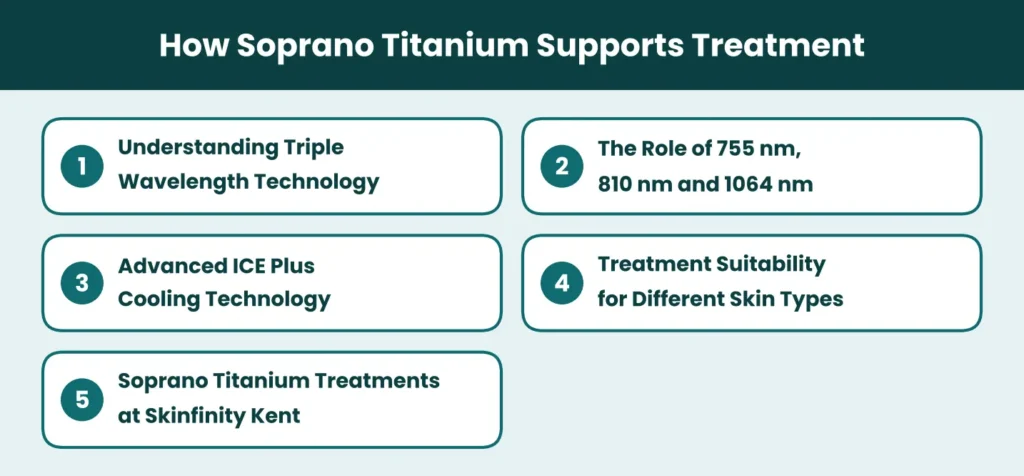
Soprano Titanium is a diode laser system from Alma Lasers. It combines three wavelengths with built in skin cooling. This setup treats different hair and skin types in one device.
Understanding Triple-Wavelength Technology
Soprano Titanium laser hair removal fires three wavelengths together. Each one reaches a different depth in the skin. Together, they cover fine hairs near the surface and coarse hairs deep in the follicle. As a result, one pass handles mixed hair types.
The Role of 755 nm, 810 nm and 1064 nm Wavelengths
Each wavelength has a clear job:
- 755 nm targets fine and light hair close to the surface.
- 810 nm treats standard hair types at medium depth.
- 1064 nm reaches deep follicles and suits deeper skin tones.
Your practitioner balances all three to match your hair and skin.
Advanced ICE Plus Cooling Technology
ICE Plus cools your skin before, during and after each pulse. This lowers discomfort and protects the skin surface. Because your skin stays cooler, your practitioner uses effective energy levels with less irritation. Most clients describe the sensation as a quick snap with a cool finish. The cooling also lets your practitioner treat larger areas comfortably.
Treatment Suitability for Different Skin Types
The three wavelengths allow safe treatment across a wide range of skin tones. Your practitioner runs a patch test first. They then set the energy to match your skin and hair. Tanned skin needs a delay, so avoid sun exposure before your visit. If you have darker skin, ask your practitioner to explain the settings they use, so you know the plan is safe for you.
Soprano Titanium Treatments at Skinfinity Kent
At Skinfinity Kent, Soprano Titanium laser hair removal covers the face and body. A free consultation sets your session plan and your spacing. For a full price breakdown, read the UK Soprano Titanium pricing guide. It shows what each area costs before you book.
Preparing for Your Laser Hair Removal Treatment
Good preparation protects your skin and improves your results. Start two to six weeks ahead. Follow these steps in order.
Weeks Before Your Treatment
- Stop waxing and plucking: These remove the root, which the laser needs. Shave instead.
- Avoid sun and tanning: Tanned skin raises the risk of burns and pigment changes.
- Pause harsh skincare: Skip retinoids and strong acids. See professional facial versus at home skincare for gentler routines.
- Disclose medications: Some drugs make skin sensitive to light. Tell your practitioner about all of them, including creams, antibiotics and supplements. Your practitioner then decides whether to proceed or wait.
The Day Before
- Shave the area: Use a clean razor so the laser targets the root and not surface hair. Avoid nicks, and skip shaving broken skin.
Day of the Appointment
- Arrive with clean skin: Skip lotions, deodorant and make up on the area.
- Wear loose clothing: It avoids friction on treated skin.
- Expect temporary side effects: Mild redness and warmth are normal and fade quickly.
Essential Aftercare Following Laser Hair Removal
Aftercare lowers irritation and protects your results. Most care fits into two stages. The first 48 hours matter most.
Immediate Aftercare (First 24 to 48 Hours)
- Cool and soothe the skin: Use a cool compress or aloe vera gel. Apply it for 10 minutes at a time if the skin feels hot.
- Avoid heat: Skip hot showers, saunas, gyms and hot baths.
- Skip friction and chemicals: Avoid perfume, scrubs and tight clothes on the area.
- Keep hands off: Scratching or picking raises the risk of infection.
Short-Term Care (Days 2 to 14)
- Protect from the sun: Apply SPF 30 or higher every day.
- Moisturise daily: Hydrated skin heals faster.
- Let hair shed naturally: Do not pluck or wax. Shaving is fine.
- Gentle exfoliation: Start after about a week. For facial areas, read the dermaplaning benefits and side effects before you combine treatments.
Professional Laser Hair Removal at Skinfinity Kent
Skinfinity Kent offers laser hair removal at its clinic in Kings Hill, West Malling. Your laser hair removal treatment starts with a free consultation. Your practitioner checks your hair, skin and goals. They then confirm your session count and spacing.
During your consultation, you cover:
- Your hair type, skin type and treatment areas
- A patch test to check how your skin reacts
- Your medical history, medications and any hormonal conditions
- A written plan with the number of sessions and gaps between them
This step removes guesswork. You leave knowing what your course involves, what it costs and when your next visit falls. Book a consultation and get a clear session plan before you pay for a full course.
Conclusion
Most people need 6 to 8 sessions, spaced 4 to 8 weeks apart. Hair colour, skin tone, hormones and treatment area change that number. Planning around these factors tells you how many laser hair removal sessions to book. After your course, one or two maintenance visits a year keep your results lasting. Smooth skin, fewer ingrown hairs and no daily shaving make the effort worthwhile.
Ready to start? Book a consultation at Skinfinity Kent, or browse more skin care guides first.
FAQs
1. How many sessions of laser hair removal are necessary?
Most people need 6 to 8 sessions. Brazilian, back, chest and facial areas can need 8 to 10. Your practitioner adjusts the total after your first few visits, based on how quickly your hair thins. Hair colour, skin tone and hormones all change the final number, so a personal consultation gives the most accurate answer.
2. How long does it take to complete 6 sessions of laser hair removal?
Six sessions take about 6 to 12 months. Underarms and bikini finish near 6 months, because the gaps are 4 to 6 weeks. Legs and arms take longer because of the 6 to 8 week gaps. Keep your appointments regular, since missed visits push the finish date back. Most clients plan around the seasons, so they finish before summer.
3. How long does laser hair removal last?
Results last for months or years, with 80% to 95% reduction after a full course. Hormones and hair type decide how long your skin stays smooth. Maintenance sessions handle later regrowth, so most clients book one or two a year.
4. How many laser hair removal sessions are needed for permanent results?
Laser delivers long term reduction, not guaranteed permanent removal. A full course of 6 to 8 sessions gets you closest to permanent results. Hair that returns later is finer, lighter and sparse. Maintenance visits keep those few hairs under control, and your practitioner can explain what to expect for your hair type.
5. How many laser sessions are needed for underarms?
Underarms need 6 to 8 sessions, spaced 4 to 6 weeks apart. Underarm hair is dark and dense, so it responds quickly. Most clients see a clear drop after the third session. Many finish with smooth skin and no more razor irritation, which makes underarms the fastest area to complete.
6. How many laser hair removal sessions for legs?
Legs need 6 to 8 sessions, spaced 6 to 8 weeks apart. Each session takes longer than underarms because of the larger area. Lower legs often need an extra session, since the hair there is finer and slower to respond.
7. How many sessions of laser hair removal for bikini area?
The bikini line needs 6 to 8 sessions. A Brazilian needs 8 to 10, because the hair is denser and responds to hormones. Space both 4 to 6 weeks apart, and shave the area before every visit.
8. How long between laser hair removal sessions?
Wait 4 to 8 weeks between visits. Face sessions sit near 4 weeks. Underarms and bikini sit at 4 to 6 weeks. Legs, arms, back and chest sit at 6 to 8 weeks. Never book sooner than your practitioner advises, because the laser needs time to catch new growth.