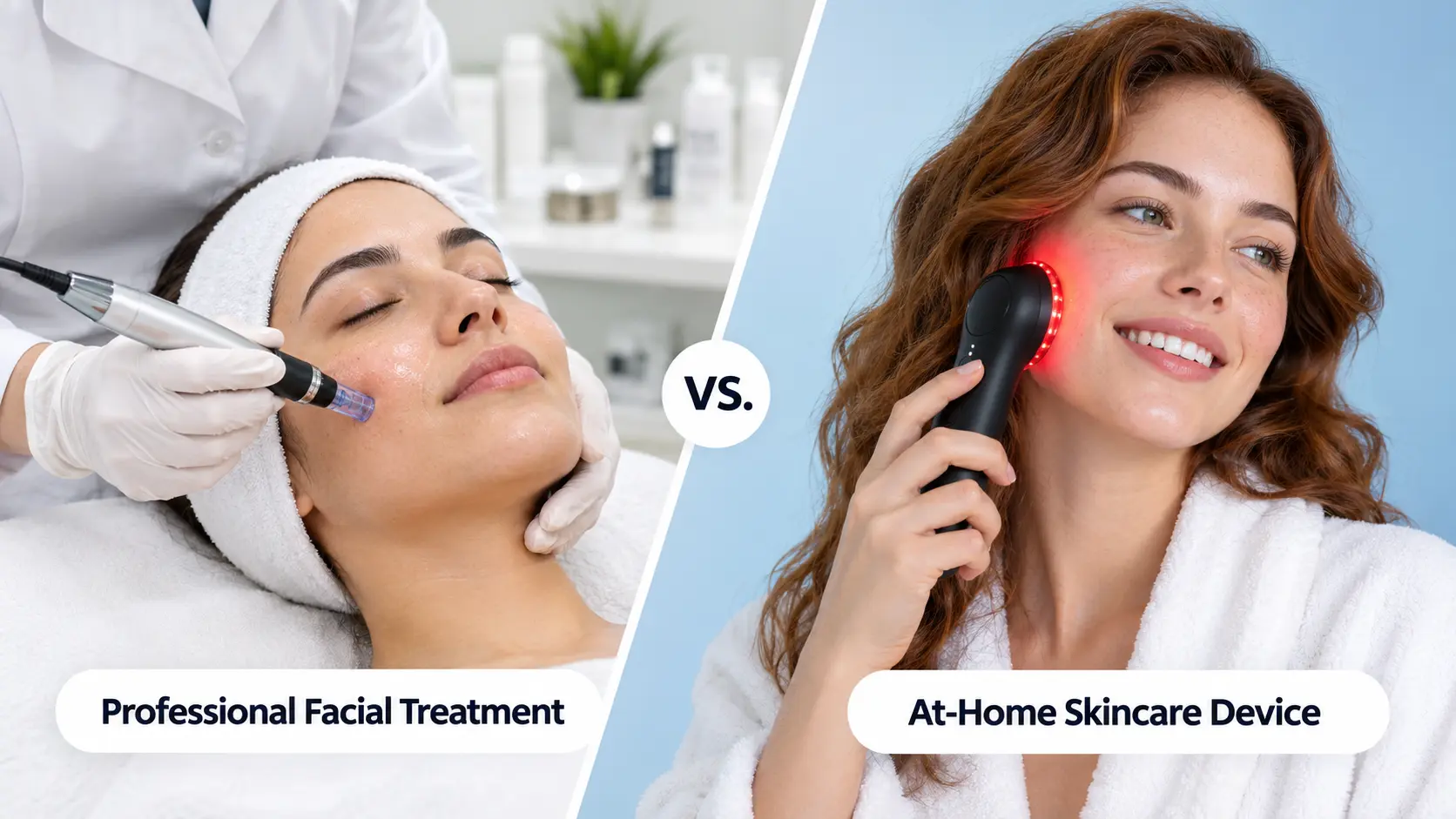
Choosing between professional facial vs at-home skincare depends on your skin concerns, budget, and schedule. Both improve skin health, but they work at different depths. This guide compares them so you can pick the right approach.
Thank you for reading this post, don't forget to subscribe!Interest in facial care keeps growing. The UK facial skincare category grew an estimated 8.6% in 2025. As a result, more people now ask whether a regular treatment or a daily routine delivers better results.
The answer is that each one solves a different problem. Daily products maintain your skin, while professional facial treatments correct specific concerns with stronger tools and trained hands. Below, you will see how each works, what each costs, and which one fits your skin.
Professional Facial vs. At-Home Skincare: Quick Comparison
This table compares both options across the factors that matter most. Use it as a fast reference before you read the details.
| Factor | Professional Facial | At-Home Skincare |
| Treatment depth | Reaches the upper skin layers through extractions, peels, and devices | Works mainly on the surface through cleansers, serums, and masks |
| Product strength | Uses clinical grade formulas applied by a trained therapist | Uses lower concentrations designed for safe daily use |
| Results timeline | Shows visible change after one session, with progress over a course | Shows gradual change over four to twelve weeks |
| Typical cost | Costs more per visit, with sessions every four to six weeks | Costs less per month, with products lasting one to three months |
| Personalisation | Adapts to your skin on the day after a full skin analysis | Follows the products you choose, which you adjust by trial |
| Best for | Congestion, dullness, uneven texture, and early ageing signs | Daily maintenance, hydration, and sun protection |
What Is a Professional Facial?
A trained therapist performs a professional facial using clinical products and specialised equipment. Sessions usually last 30 to 90 minutes and start with a skin analysis. Your therapist then builds the treatment around your skin type and concerns.
A typical session follows three stages:
- Cleansing and analysis: The therapist removes makeup, checks your skin condition, and selects products to match.
- Treatment steps: Depending on the facial, this includes steam, exfoliation, extractions, masks, massage, and device based therapy.
- Finishing care: The session ends with serums, moisturiser, and SPF to protect the treated skin.
Common facial types include:
- Deep cleansing facials: These target congestion, blackheads, and excess oil.
- Hydrating facials: These restore moisture with serums, masks, and massage.
- Anti-ageing facials: These use devices such as microcurrent, LED, or radiofrequency to support firmness.
- Peel-based facials: These use acids to resurface dull or uneven skin.
Benefits of Professional Treatments
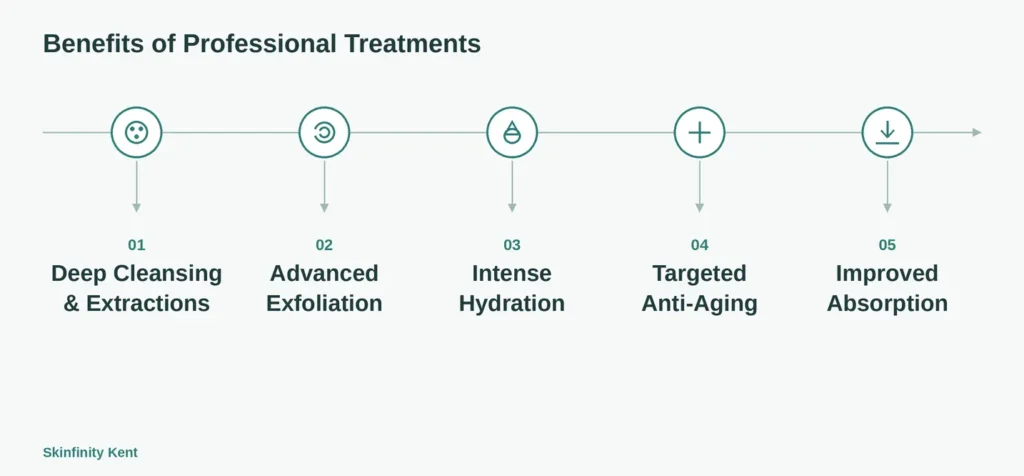
Professional treatments reach what daily products cannot. Trained therapists use controlled techniques and stronger actives to treat specific concerns. Here are the five main benefits.
1. Deep Cleansing & Extractions
A therapist clears blocked pores with steam, gentle pressure, and sterile tools. This removes blackheads and congestion that cleansers leave behind. As a result, your skin looks clearer and breaks out less often.
Best for: Oily, congested, or breakout prone skin. Poor extraction technique at home causes scarring and infection, so professional hands are safer.
2. Advanced Exfoliation
Professionals use chemical peels, enzymes, and blade methods to remove dead skin cells evenly. Our guide to dermaplaning benefits and side effects explains how blade exfoliation smooths texture and removes fine facial hair. Home exfoliants work too, however they use lower strengths for safety.
Best for: Dull skin, rough texture, and uneven tone.
3. Intense Hydration & Barrier Support
Professional hydration treatments deliver humectants, peptides, and ceramides in higher concentrations. Masks and massage then lock in moisture. This restores a damaged skin barrier faster, which reduces dryness, tightness, and sensitivity.
Best for: Dehydrated skin, winter dryness, and skin recovering from over exfoliation.
4. Targeted Anti-Aging
Treatments such as microneedling, radiofrequency, and LED therapy stimulate collagen production. Collagen levels fall steadily with age. Therefore, regular treatments slow the visible signs of fine lines and loss of firmness.
Best for: Early lines, reduced firmness, and uneven skin quality.
5. Improved Product Absorption
Cleansing and exfoliation remove the dead cell layer that blocks active ingredients. Your serums then spread more evenly after a facial. In addition, a therapist advises which products suit your skin, so you stop buying items you do not need.
Best for: Anyone whose products seem to do very little.
What Is At-Home Skincare?
When you weigh professional facial vs at-home skincare, remember that at-home care is the daily routine of products and tools you use yourself. It covers cleansing, treating, moisturising, and protecting. Because you apply it every day, it forms the foundation of long term skin health.
A basic routine includes:
- Cleanser: Removes oil, dirt, and makeup without stripping the skin.
- Treatment serum: Delivers actives such as vitamin C, niacinamide, retinol, or hyaluronic acid.
- Moisturiser: Supports the skin barrier and prevents water loss.
- SPF 30 or higher: Protects against UV damage, the main cause of premature ageing.
- Optional extras: Masks, gentle exfoliants, and devices such as LED masks add targeted support.
The Benefits of At-Home Skincare
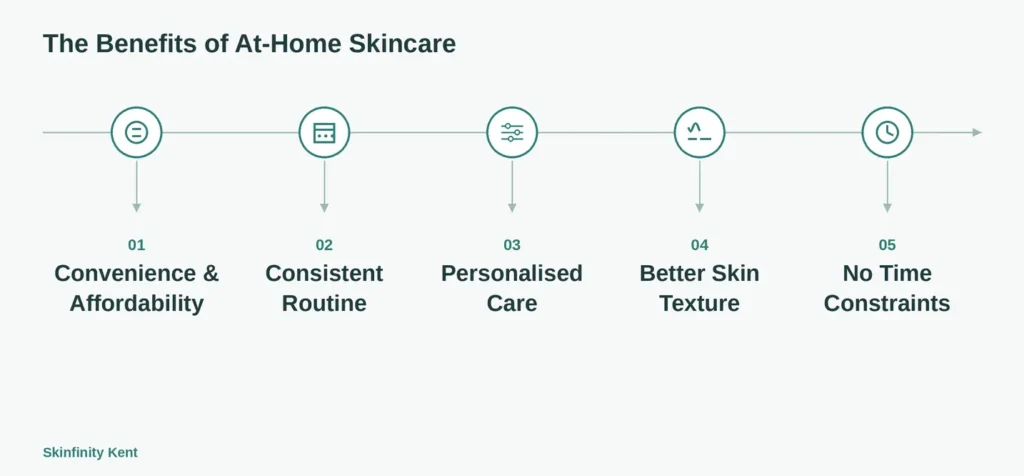
A good routine delivers steady results at a low cost. These five benefits explain why daily care matters.
1. Convenience and Affordability
You apply products on your own schedule, with no travel or appointment. A full routine of cleanser, serum, moisturiser, and SPF typically costs less than a single facial and lasts one to three months.
2. Builds a Consistent Routine
Skin responds to regular care. Daily use of the same actives gives your skin time to adapt, so results build week after week. Consistency matters more than the number of products you own.
3. Allows Personalised Care
You adjust your routine to the season, your hormones, and your skin on the day. For example, you swap a heavy cream for a gel in summer and add a richer moisturiser in winter. This control helps you respond quickly when your skin changes.
4. Improves Skin Texture
Ingredients such as retinol, niacinamide, and mild acids smooth rough patches and refine pores over time. Our skincare tips for glowing skin cover the habits that support this, including sleep, hydration, and sun protection.
5. No Time Constraints
A routine takes five to ten minutes. You skip travel and waiting rooms, and you fit care around work and family. As a result, you rarely miss a step.
Factors to Consider Before Choosing a Professional Facial or At-Home Skincare
Choosing between a professional facial vs at-home skincare depends on your skin type, concerns, budget, lifestyle, and desired results. Professional treatments can target specific skin concerns with expert guidance, while a consistent home routine helps maintain skin health between appointments. Consider these six factors before deciding which option suits your needs.
1. Skin Type and Sensitivity
Oily and congested skin responds well to professional extractions. Sensitive or reactive skin needs a controlled setting, because a therapist adjusts products in real time. Dry skin benefits from hydrating facials and a rich home routine. Tell your therapist about allergies, medications, and active skin conditions before any treatment.
2. Skin Concerns and Goals
Match the option to the concern you want to fix:
- Acne and congestion: Professional extractions work alongside a home routine with salicylic acid.
- Pigmentation: Peels fade marks faster, while daily SPF stops new ones forming.
- Fine lines: Collagen stimulating treatments pair well with a nightly retinol.
- Dehydration: Hydrating facials restore moisture, and humectant serums keep it there.
3. Budget and Long Term Costs
Facials cost more per visit, but one session often replaces several products you would buy to chase the same result. A home routine spreads the cost across months. Many people book a facial every four to six weeks and keep a simple routine in between.
4. Schedule and Convenience
Facials need a booking, travel, and 45 to 90 minutes. Home routines need five to ten minutes twice a day. If your diary is full, a simple routine plus two or three facials a year is realistic.
5. Level of Treatment
Professionals use medical grade devices and stronger acids that are unsafe for home use. Home products are formulated for daily use, so they work gently. Choose professional care when you need correction instead of maintenance.
6. Expected Results
Professional facials can leave your skin looking brighter, smoother, and more hydrated after treatment. At-home skincare works gradually with consistent use. While both options can improve your skin’s appearance, results depend on your skin type, concerns, and the products or treatments you choose.
How to Choose the Right Option for Your Skin
Match your goals, budget, and time to the right approach. Most people land on one of three paths. Once you know which one describes you, the professional facial vs at-home skincare decision becomes simple.
Choose Professional Facials If…
- You have persistent congestion, blackheads, or breakouts that products do not clear.
- You want to correct uneven texture, dullness, or early signs of ageing.
- Your skin needs a professional assessment before you use active ingredients.
- You prefer a few scheduled treatments over managing a long routine.
- You are preparing for an event and want visible results within days.
Choose At-Home Skincare If…
- You want daily maintenance and sun protection at a low monthly cost.
- Your skin is generally healthy and you want to keep it balanced.
- Your schedule makes regular appointments difficult.
- You enjoy learning about ingredients and adjusting your routine.
- You are new to skincare and want to build habits first.
Consider Both for a Balanced Skincare Routine
Most skin concerns improve fastest when you combine both. A professional facial handles correction. Your home routine handles maintenance and extends results between appointments.
A simple plan looks like this:
- Book a facial every four to six weeks. Skin renews itself in about 28 days in younger adults and more slowly with age, so this timing suits most people.
- Cleanse, treat, moisturise, and apply SPF every day.
- Pause strong actives such as retinol for a few days before and after treatments, as your therapist advises.
Personalised Professional Facial Treatments at Skinfinity Kent
Skinfinity Kent offers professional facial care at its clinic in Kings Hill, West Malling. Choosing a treatment depends on your skin type, concerns, and goals. The clinic also offers advanced skin treatments, including microneedling and RF microneedling, which can help improve skin texture and firmness.
The clinic offers several treatment options, including:
- HydraFacial: A HydraFacial treatment combines cleansing, exfoliation, extractions, and hydration to help improve skin clarity and leave it looking refreshed.
- Microneedling: Uses fine needles to stimulate the skin’s natural repair process and help improve the appearance of uneven texture, fine lines, and acne scars.
- RF Microneedling: Combines microneedling with radiofrequency energy to target concerns such as uneven skin texture and reduced firmness.
- Other facial treatments: Depending on the treatment, professional facials can help address concerns such as dullness, dehydration, and visible signs of ageing.
If you are unsure which treatment suits your skin, consult a qualified skincare professional to discuss your concerns and identify an appropriate option.
Conclusion
The choice of professional facial vs at-home skincare is not a contest. Professional facials correct concerns and give fast, visible change. At-home skincare protects those results and keeps your skin stable between visits.
Match your approach to your skin type, goals, budget, and schedule. If you are unsure, start with a consultation and a simple home routine, then add treatments as your goals become clear.
Frequently Asked Questions
1. What is the main difference between professional facial vs at-home skincare?
A professional facial treats concerns such as congestion, dullness, and texture more deeply with clinical products and devices. At-home skincare maintains those results every day. Most people get the best outcome from using both.
2. How often should you get a professional facial?
Every four to six weeks suits most skin types because it matches the skin’s renewal cycle. Sensitive skin and stronger treatments such as microneedling need longer gaps. Follow your therapist’s advice.
3. Can at-home skincare replace professional facials?
At-home skincare keeps skin healthy, but it does not replace extractions, medical grade peels, or device based treatments. If your skin is healthy and your goals are simple, a good routine is enough.
4. Are professional facials safe for sensitive skin?
Yes, when the therapist adapts products and techniques. Share your history of reactions and any medications before treatment. Gentle options such as hydrating facials and LED therapy suit reactive skin.
5. What should beginners start with?
Start with a home routine of cleanser, moisturiser, and SPF. Add one active ingredient once your skin adjusts. Then book a facial to get a professional skin analysis and tailored advice.
6. What Type of Facial Is Most Effective?
The most effective facial depends on your skin type and concerns. HydraFacial can help with cleansing and hydration, while other professional facials may target acne, uneven texture, or signs of ageing. A skincare professional can help you choose a suitable treatment.
7. Can At-Home Skincare Replace Professional Facials?
At-home skincare can maintain healthy-looking skin through regular cleansing, moisturising, and sun protection. However, it may not provide the same specialised treatments as a professional facial. Combining a consistent home routine with occasional professional treatments can help address different skincare needs.
8. Are Professional Facials Worth the Cost?
Professional facials can be worth the cost if you want targeted treatment, personalised skincare advice, or help addressing specific concerns. However, results depend on the treatment and your skin’s needs.