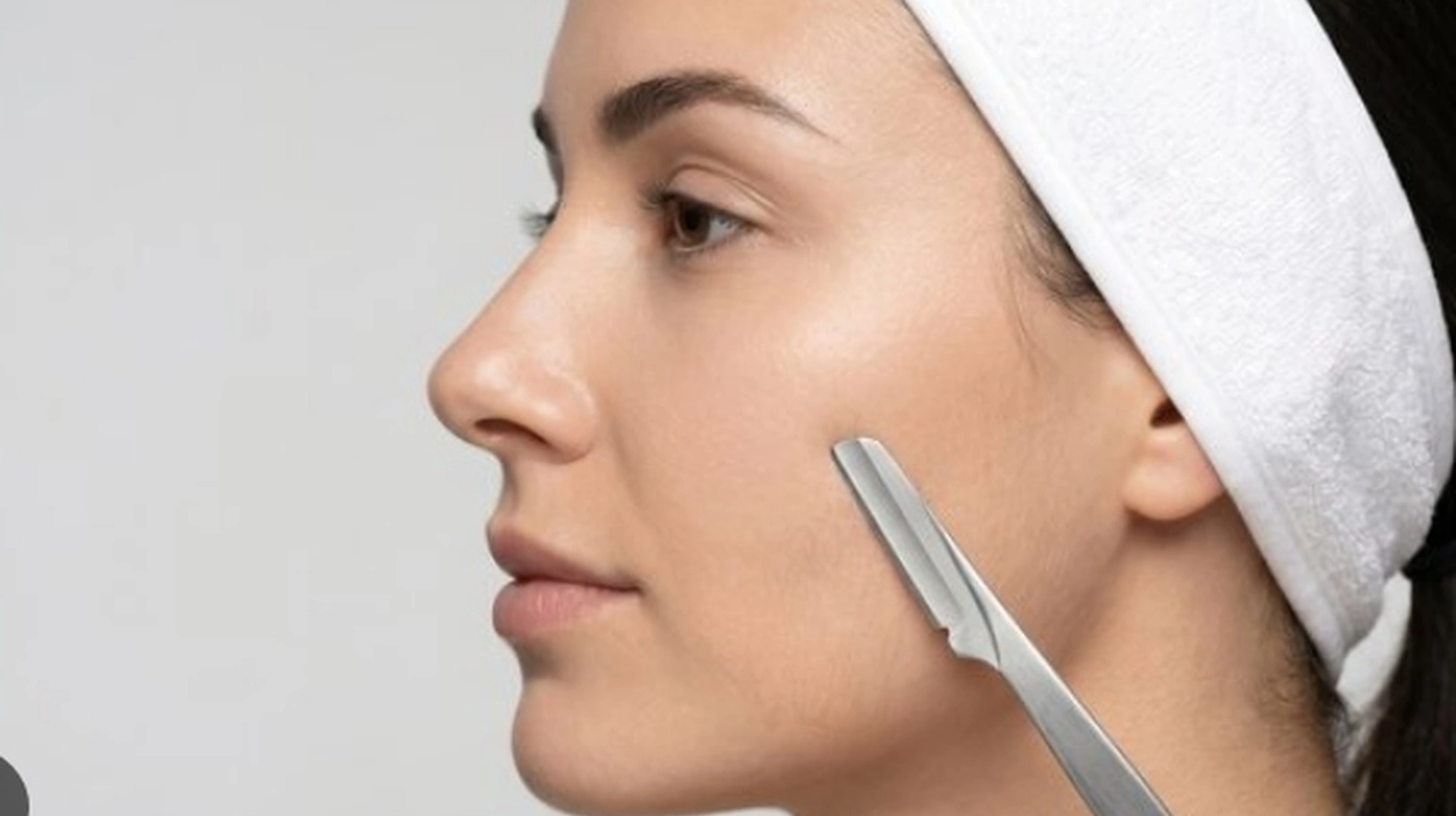
Dermaplaning removes peach fuzz and dead skin cells with a sterile blade in one short session. Before you book, you need to understand the dermaplaning benefits and side effects so you can decide if the treatment suits your skin. This guide covers the procedure, results, risks, and aftercare in plain terms.
Thank you for reading this post, don't forget to subscribe!Overall, demand for skin exfoliation keeps growing. The International Society of Aesthetic Plastic Surgery (ISAPS) reported 20.5 million non surgical aesthetic procedures worldwide in 2024, and chemical peels ranked in the top five. Dermaplaning belongs to the same facial exfoliation category, but it uses a blade instead of acid.
A professional dermaplaning treatment takes about 30 minutes and gives instant results. However, your outcome depends on technique, skin type, and aftercare. Below, you will find clear answers on what to expect, how to stay safe, and who should skip the treatment.
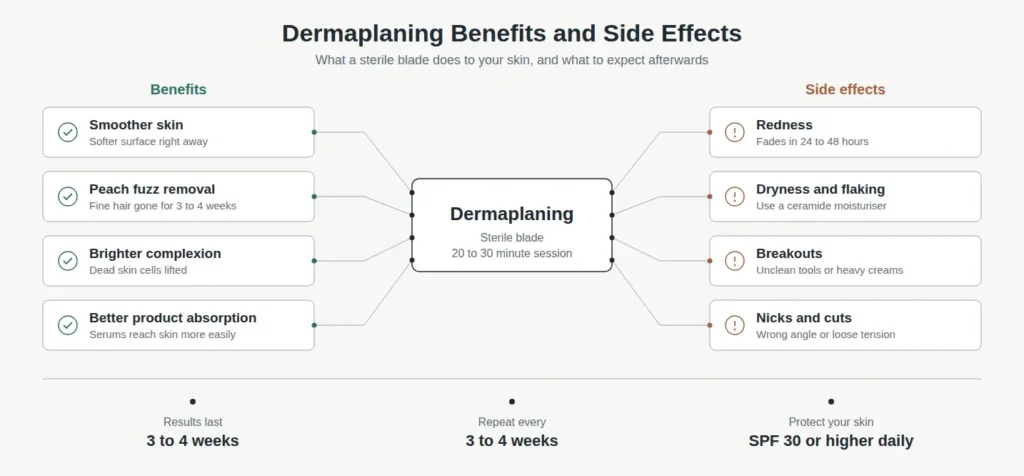
Dermaplaning Benefits and Side Effects at a Glance
What Is Dermaplaning and How Does It Work?
Dermaplaning is a cosmetic treatment that shaves the skin’s surface with a sterile scalpel blade. The blade removes fine facial hair and the outer layer of dead skin cells. Importantly, it does not reach deeper skin layers.
Naturally, your skin sheds surface cells every few weeks. Dermaplaning then speeds up that process for a short time. As a result, your skin feels smooth right away, and the effect lasts about three to four weeks. Those short term results shape the dermaplaning benefits and side effects covered below.
How the Blade Works on Your Skin
Your outer skin layer, the stratum corneum, holds several layers of dead cells. These cells protect your skin, but they also build up and dull your surface. The blade glides across this layer at a shallow angle and shaves off the top portion. It stops long before living skin.
The same pass cuts vellus hair, which is the soft, pale fuzz on your cheeks, forehead, and upper lip. Because the blade cuts hair at the surface, it leaves the follicle untouched. Therefore, your hair grows back from the same root with the same texture.
Dermaplaning at Home vs Professional Treatment
| Factor | At home | Professional |
| Tool | Small guarded razor | Sterile surgical blade |
| Training | None | Trained therapist |
| Skin check | None | Consultation first |
| Cut and infection risk | Higher | Lower |
| Exfoliation | Light and uneven | Even and controlled |
| Best for | Occasional touch ups | First time treatments |
Your tool and technique shape the results you get. A guarded razor removes light fuzz, but it exfoliates less evenly. In addition, a poor angle raises the chance of nicks. Beginners get safer results from a trained practitioner.
Dermaplaning vs Shaving, Peels, and Microdermabrasion
Several treatments smooth the skin, but each works differently. This table shows how they compare.
| Treatment | How it works | Removes facial hair | Typical downtime |
| Dermaplaning | Blade shaves dead cells | Yes | Little to none |
| Face shaving | Razor cuts hair at the surface | Yes | None |
| Chemical peel | Acid dissolves dead cells | No | Depends on peel strength |
| Microdermabrasion | Crystals or a diamond tip buff the surface | No | Little to none |
Dermaplaning gives you physical exfoliation and hair removal in one step. In contrast, peels work through chemistry and suit concerns such as uneven tone. As a result, many people choose a treatment based on their main goal.
The Dermaplaning Procedure: Step by Step
A full dermaplaning treatment takes 20 to 30 minutes. Your therapist follows five steps.
Step 1: Skin Cleansing
Your therapist removes makeup, oil, and sunscreen with a gentle cleanser. Clean skin also lets the blade glide and lowers infection risk.
Step 2: Blade Positioning and Tension
Next, the therapist holds your skin taut and places the blade at a 45 degree angle. Firm tension keeps the surface flat, which prevents nicks.
Step 3: Gentle Exfoliation
Short, light strokes move across each area of your face. Each pass then lifts dead cells and fine hair. However, practitioners skip the eyelids and any inflamed spots.
Step 4: Soothing and Hydration
Then your therapist applies a calming serum or mask. Hyaluronic acid and ceramide products restore the moisture you lose with the surface layer.
Step 5: Sun Protection
Finally, you receive a broad spectrum SPF 30 or higher. Freshly exfoliated skin burns more easily, so this step protects your results. Each step also shapes the dermaplaning benefits and side effects you see afterwards.
Preparing for Your Next Session
Good preparation lowers irritation. Follow these steps before you arrive:
- Stop retinol, exfoliating acids, and scrubs for three to five days.
- Avoid sunburn and tanning beds in the week before.
- Skip heavy creams on the day of your session.
- Tell your therapist about medication, skin conditions, and recent treatments.
Benefits of Dermaplaning
These dermaplaning benefits for skin are cosmetic and short term. Large clinical trials remain limited, so most evidence comes from clinical practice and small studies.
1. Facial Exfoliation and Dead Skin Cell Removal
The blade lifts the dull layer that builds up on your face. Unlike scrubs, it uses no gritty particles.
Cell turnover also slows as you age, so dead cells linger longer on the surface. As a result, mature skin often looks rough or dull. Gentle exfoliation helps your skin reflect light more evenly.
2. Removes Peach Fuzz
The blade cuts fine hair at the skin’s surface. As a result, this peach fuzz removal keeps your face hair free for about three to four weeks, until regrowth starts.
Peach fuzz is vellus hair. It is soft, light, and grows on most faces. Dermaplaning works well on this fine hair. However, thicker hair on the chin or jawline needs a different method.
3. Smoother Skin Texture
With the dull layer gone, light reflects evenly. The surface feels softer, and creams spread more easily.
4. Brighter Complexion
Stacked dead cells make skin look flat and tired. In turn, removing them reveals fresher skin underneath. However, the glow lasts until new cells build up.
5. Better Skincare Product Absorption
A thinner dead layer lets water based serums, such as hyaluronic acid, reach your skin more easily. However, strong actives sting freshly exfoliated skin. Therefore, pause retinol and acids for 48 hours.
Hydrating serums and peptide products reach the skin more easily after a session. Therefore, choose gentle formulas first and add stronger products later.
6. Better Makeup Application
Foundation sits flatter once hair and flaky patches disappear. In addition, powder stops clinging to fine hair.
You also avoid the cakey look that fuzz can cause around the cheeks. Primer and base products glide on without catching on hair.
7. Minimises Fine Lines and Scars
Overall, exfoliation softens the look of fine lines and shallow texture. However, it does not remove deep wrinkles or scars. For those concerns, explore skin rejuvenation treatments such as microneedling. Therefore, weigh the dermaplaning benefits and side effects before you book.
Dermaplaning Side Effects and Risks
Fortunately, most reactions are mild and fade within 48 hours. Serious problems are rare, but they do happen.
Common Side Effects
- Redness and irritation: Your skin turns pink and feels warm for 24 to 48 hours.
- Dryness and flaking: Removing the surface layer reduces moisture, so tightness is common.
- Breakouts: Unclean tools or heavy creams also trigger pimples.
- Nicks and cuts: Loose skin tension or a wrong angle causes small cuts.
When to Seek Help
Contact your practitioner or doctor if you notice spreading redness, swelling, pus, or fever. Also seek advice if irritation lasts longer than three days. Early attention prevents small problems from becoming scars.
Serious Dermaplaning Risks
Serious complications are uncommon. Still, each one needs prompt attention from a professional.
- Infections: Cuts let bacteria in, and dirty blades raise the risk further.
- Scarring: Deep cuts or picked scabs leave marks, especially on keloid prone skin.
- Pigment changes: Irritation plus sun exposure darkens skin, and deeper skin tones face a higher risk.
- Over exfoliation: Frequent sessions damage the skin barrier and cause burning or sensitivity.
How to Lower Your Risk
Most problems come from poor hygiene, bad technique, or treating irritated skin. These habits cut the chance of trouble:
- Choose a trained practitioner who opens a new, sterile blade in front of you.
- Skip the session when your skin is inflamed or sunburned.
- Use a fresh blade every time, and never share blades.
- Keep the skin taut and use light, short strokes.
- Apply SPF every day afterwards.
Is Dermaplaning Safe for Sensitive Skin?
Overall, dermaplaning is safe for most healthy skin when a trained practitioner performs it. Sensitive skin shows the dermaplaning benefits and side effects faster, because the barrier is already thin. Your therapist should use light pressure, one pass per area, and a calming finish. In contrast, skip treatment during flare ups of rosacea, eczema, or psoriasis.
Dermaplaning for Different Skin Types
Your skin type changes how you approach the session.
- Dry skin: Exfoliation removes flakes, so pair it with a rich moisturiser afterwards.
- Oily skin: The surface feels cleaner, but oil returns within a few days.
- Acne prone skin: Treat only when spots are calm, because the blade spreads bacteria across active breakouts.
- Deeper skin tones: Use gentle technique and strict sun protection to lower the chance of dark marks.
- Mature skin: Slower cell turnover leaves more dull cells on the surface, so you notice a bigger change.
Who Should Avoid Dermaplaning
A trained therapist screens your skin before professional dermaplaning. This check matters because the blade thins the skin barrier. Avoid the treatment if you have:
- Active acne with inflamed or pus filled spots
- A flare up of rosacea, eczema, or psoriasis
- Cold sores or another active skin infection
- Sunburn or irritation from a recent laser, peel, or microneedling session
- Open wounds, warts, or raised moles in the treatment area
- Keloid prone skin or a history of poor scarring
- Recent isotretinoin use, unless your prescriber gives clearance
If dermaplaning does not suit your skin, ask about other advanced skin treatments that target texture and dullness.
How to Choose a Practitioner
Training and hygiene decide your results. Before you book, look for these signs:
- Formal training in blade based exfoliation and a clear consultation process.
- A written medical history form before the session.
- A new, sterile blade opened in front of you.
- A clean treatment room and clear aftercare instructions.
- Honest answers about what the treatment can and cannot do.
Dermaplaning Aftercare: What to Do and What to Avoid
Your aftercare decides how the dermaplaning benefits and side effects play out. Therefore, follow these rules to keep your skin calm.
What to Do (First 24 to 48 Hours)
- Cleanse gently: Use lukewarm water and a mild, fragrance free gel cleanser. Pat dry with a clean towel.
- Hydrate: Apply a simple moisturiser or serum with hyaluronic acid or ceramides to calm tightness.
- Wear sunscreen: Because skin burns easily after exfoliation, use a broad spectrum mineral SPF 30 or higher every day, even when it is cloudy.
- Drink water: Good hydration supports skin recovery.
Why Sun Protection Matters So Much
The dead cell layer works as a thin shield against UV light. Dermaplaning removes part of it, so newer cells face the sun sooner. As a result, unprotected skin burns and darkens more easily. Apply sunscreen every morning, and reapply every two hours outdoors. In addition, wear a hat in strong sun for the first week.
What to Avoid (First 24 Hours to 1 Week)
- Makeup: Skip it for 24 hours so your pores stay clear.
- Active skincare: Pause retinol, acids, vitamin C, and benzoyl peroxide for at least 48 hours.
- Heat and heavy sweat: Avoid saunas, hot showers, and hard workouts for 24 hours.
- Chlorine and swimming: Stay out of pools for 48 hours.
- Other facial treatments: Wait one week before peels, lasers, waxing, or microneedling.
- Picking: Leave flaking skin alone to prevent scarring.
What to Expect as Your Skin Settles
Healing follows a predictable pattern.
- Day 1: Your skin looks pink and feels tight.
- Days 2 and 3: Mild dryness or flaking appears, so keep moisturising.
- Day 7: Your skin settles, and you can restart stronger products and other treatments.
Why You Should Choose Dermaplaning at Skinfinity Kent
At Skinfinity Kent, we combine experienced care with a personal approach to your skin. Our professional dermaplaning treatment at our clinic in Kings Hill, West Malling, begins with a skin assessment and a conversation about your concerns and goals. Before starting, we check whether the treatment suits your skin and explain what to expect, helping you feel comfortable and informed.
We take the time to answer your questions rather than treating your appointment as a one-size-fits-all service. Whether you are new to dermaplaning or considering it as part of your skincare routine, our focus is on attentive care and clear, personalised advice.
- Free consultation: Discuss your skin type, concerns, and goals before deciding on treatment.
- Experienced practitioner: Jodie brings over 11 years of experience to your care.
- Personalised attention: Your visit starts with understanding your skin and what you hope to achieve.
- Flexible appointments: Our clinic opens seven days a week, making it easier to plan your visit.
- Convenient parking: Off-road parking is available next to the clinic.
Book a free consultation with Skinfinity Kent to explore whether dermaplaning is the right choice for your skin and your routine.
Conclusion
Dermaplaning gives you smoother, brighter skin for three to four weeks. It also brings short term side effects and a few real risks. Weigh the dermaplaning benefits and side effects against your skin type, then choose a trained practitioner. Book a consultation with Skinfinity Kent to check whether dermaplaning suits you.
FAQs About Dermaplaning
These quick answers cover the most common dermaplaning benefits and side effects questions.
1. What should you not do after dermaplaning?
Avoid makeup for at least 24 hours, exfoliating products, retinoids, excessive heat, swimming pools, and direct sun exposure. Do not pick or scrub your skin, as it may be more sensitive immediately after treatment.
2. What’s the best thing to put on after dermaplaning?
Use a gentle, fragrance-free moisturiser containing ceramides or hyaluronic acid to hydrate your skin. Apply broad-spectrum SPF 30 or higher during the day to protect your skin from UV damage.
3. Should you moisturise immediately after dermaplaning?
Yes. Apply a gentle moisturiser after treatment to keep your skin hydrated and support its protective barrier. Avoid products containing strong active ingredients that may cause irritation.
4. How long do I wait to wash my face after dermaplaning?
Follow your practitioner’s aftercare instructions. Generally, you can gently cleanse your face the same evening using lukewarm water and a mild cleanser. Avoid hot water and harsh scrubs.
5. Who benefits from dermaplaning?
Dermaplaning may benefit people with dull-looking skin, uneven texture, or unwanted fine facial hair. It removes dead surface cells and peach fuzz, leaving the skin feeling smoother. However, it may not be suitable for skin with active inflammation.
6. Does dermaplaning have negative effects?
Yes. Temporary redness, dryness, irritation, and minor cuts can occur after dermaplaning. Infection and changes in skin pigmentation are less common but possible, particularly when the procedure is performed incorrectly or aftercare instructions are not followed.
7. Can you explain what dermaplaning is and how it works?
Dermaplaning is a professional exfoliation treatment that uses a sterile surgical blade to remove dead skin cells and fine facial hair. It leaves the skin feeling smoother and can help makeup apply more evenly. Results commonly last around three to four weeks, depending on individual hair growth and skin renewal.
8. Is dermaplaning safe?
Dermaplaning is generally considered safe for suitable skin when performed by a properly trained practitioner using sterile equipment. However, it can cause cuts, irritation, or infection. Professional advice is important if you have a skin condition or are unsure whether the treatment is suitable for you.
9. Who should avoid dermaplaning?
Avoid dermaplaning over active acne, open wounds, sunburn, or skin infections. People experiencing eczema, rosacea, or psoriasis flare-ups should seek advice from a qualified professional before treatment, as exfoliation may worsen irritation.
10. How often should you get dermaplaning?
Many people schedule dermaplaning every three to four weeks, depending on their skin condition and treatment goals. Allowing enough time between sessions helps reduce the risk of irritation and over-exfoliation. Your practitioner can recommend a suitable schedule.
11. Does dermaplaning help makeup apply better?
Yes. Removing dead skin cells and fine facial hair creates a smoother surface, helping foundation and other makeup products blend more evenly. However, results vary depending on your skin condition and the products you use.
12. Does dermaplaning make hair grow back thicker?
No. Dermaplaning does not change the thickness, colour, or growth rate of facial hair because it only removes hair at the skin’s surface. Regrowth may temporarily feel slightly rough because the cut hair ends are blunt.
13. Does dermaplaning hurt?
Dermaplaning is generally painless. Most people experience a light scraping sensation or mild tickling as the blade moves across the skin. If you experience sharp pain or significant discomfort, tell your practitioner immediately.
14. Can you do dermaplaning when you have a pimple?
It is best to avoid dermaplaning directly over active, inflamed pimples. The blade can irritate the area, damage the skin, and potentially spread bacteria. Wait until the spot has healed, and consult your practitioner if you have persistent or widespread acne.